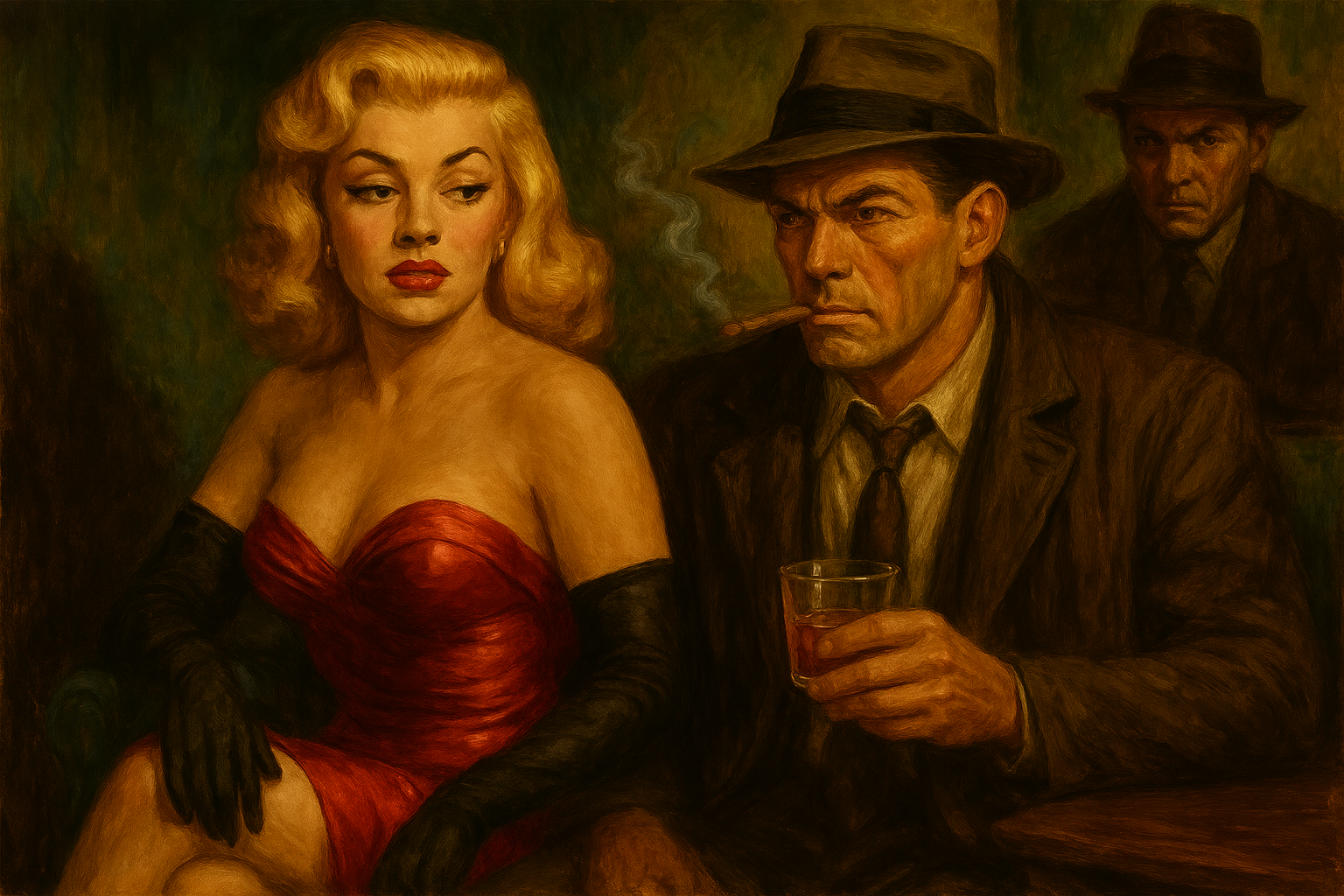
Some books don’t ask for your attention. They grab you by the collar, pour you a stiff drink, and send you down a rain-slick street with a wisecracking private eye who knows the world is crooked but keeps moving anyway. That is the lasting pull of hardboiled detective books. They are lean, unsentimental, and built on pressure – moral pressure, street pressure, and the pressure of a man trying to do one decent thing in a city that rewards the opposite.
For readers who grew up on old crime films, wartime grit, and stories where character matters more than polish, this corner of fiction still hits like a .38 on a quiet block. The best hardboiled novels do more than solve a case. They show what a man does when the law is weak, the truth is costly, and every favor comes with a knife behind it.
What makes hardboiled detective books different
A hardboiled detective is not a puzzle-solver in a tidy drawing room. He works the alleys, bars, cheap offices, bus depots, and hotel lobbies where desperation hangs in the air. He gets lied to for a living. He gets hit, framed, tempted, and betrayed. Sometimes he gets paid.
What separates hardboiled fiction from other mystery writing is not just the violence or the slang. It is the attitude. These stories carry a stripped-down moral code. The detective may be cynical, but he is not hollow. He usually stands for something, even if he has to stand alone. That tension is the engine of the whole form.
The prose matters, too. Good hardboiled writing does not waste words. It lands clean and hard. You remember a line because it sounds true, not because it is dressed up. Raymond Chandler could make a city block feel dangerous in a single sentence. Mickey Spillane could make vengeance feel like a mission. The style is part of the punch.
10 hardboiled detective books that still deliver
Some readers want the classics first. Others want the books that hit hardest. The truth is, you need both. The genre was built by a few giants, but it stayed alive because later writers kept the code intact while changing the ground under the detective’s feet.
The Big Sleep by Raymond Chandler
This is one of the foundation stones. Philip Marlowe walks into wealth, rot, blackmail, and family corruption, and Chandler makes every room feel like a trap. The plot is famously tangled, but that is not a flaw so much as part of the experience. You read Chandler for voice, atmosphere, and the stubborn decency of a man who refuses to be bought.
Red Harvest by Dashiell Hammett
If you want to see where the hardness comes from, start here. Hammett’s Continental Op steps into a poisoned town and watches it tear itself apart. This book is colder and more brutal than many readers expect, and that is exactly why it matters. It helped shape the idea that crime fiction could be fast, political, and merciless.
The Maltese Falcon by Dashiell Hammett
Sam Spade is one of the great operators in American fiction. He is sharp, ruthless, and never as simple as he looks. This novel gives you betrayal, greed, and a cast of liars circling an object everyone wants and nobody understands. It is hardboiled to the bone, but it also has elegance in its construction.
Farewell, My Lovely by Raymond Chandler
Many readers come to Chandler through The Big Sleep, but this one often leaves the deeper mark. Marlowe moves through a Los Angeles full of muscle, corruption, bad luck, and faded glamour. The story has a bruised sadness to it that gives the violence more weight. It is a detective novel with a soul under the scar tissue.
I, the Jury by Mickey Spillane
Mike Hammer does not walk into a room wondering what everyone feels. He walks in looking for the truth and someone to blame. Spillane brought a harsher, more vengeful energy to hardboiled fiction, and that made him wildly popular. Some readers love that raw force. Others find it too blunt. Fair enough. But if you want to understand the muscular side of American noir, this book belongs on the shelf.
The Moving Target by Ross Macdonald
Lew Archer is more reflective than Spade or Hammer, but do not mistake that for softness. Macdonald brought psychological depth to the private eye novel without draining away its danger. This book begins with a missing-person case and opens into family damage, money trouble, and buried sins. It shows how hardboiled fiction matured without losing its edge.
The Goodbye Look by Ross Macdonald
This is Archer at full strength. Macdonald was especially good at showing how the crimes of one generation stain the next. The mystery works, but the emotional wreckage is what lasts. If Chandler gave the genre style and Hammett gave it steel, Macdonald gave it consequence.
Devil in a Blue Dress by Walter Mosley
Easy Rawlins is one of the great detectives to emerge after the classic era, and this novel proves the hardboiled tradition still had fresh ground to cover. Set in postwar Los Angeles, it brings race, housing, power, and survival into the center of the story. The result is not a museum piece or a nostalgic imitation. It is a living hardboiled novel with blood in its veins.
The Black Echo by Michael Connelly
Harry Bosch is a cop, not a private eye, which may make some purists hesitate. Still, the moral DNA is hardboiled. Bosch works with obsession, anger, and a lonely code that puts him at odds with institutions around him. This novel pulls the genre into a modern city without sanding off its rough edges.
Gunny Mac Private Detective by Steven Walker
If your taste runs toward WWII shadows, Marine Corps grit, and detectives forged by service and sacrifice, this is where the tradition takes on a distinctly martial edge. The appeal is not just in the noir machinery of danger and suspense. It is in the sense that the man at the center has earned his toughness the hard way. For readers who like their mysteries with history, patriotism, and postwar scars still showing, this kind of hardboiled storytelling lands clean.
Why these books still matter
Hardboiled fiction endures because it does not promise a clean world. It promises a fight. That difference matters. Readers come back to these novels because they understand something basic about life: institutions fail, people break faith, and justice is rarely pure. But a man can still choose his ground.
That old code still resonates, especially with readers who value duty, loyalty, and grit over fashionable ambiguity. The detective may bend rules, but he is not drifting. He knows wrong when he sees it. He may not save the whole city, but he will not look away from its ugliness either.
There is also a strong historical current running through the best of the genre. Many classic hardboiled detective books were shaped by war, depression, corruption, and urban change. They came from a country wrestling with power and disillusionment. That is part of why they still feel alive. They were never soft entertainment. They were stories about pressure, written under pressure.
Where new readers should start
If you are new to the genre, Chandler is often the best entry point because the writing is so memorable. If you want a colder, tougher foundation, start with Hammett. If you prefer psychological damage and family secrets, Macdonald is your man. If you want postwar noir with a wider American frame, Mosley is essential.
It depends on what you read for. Some readers want style first. Some want action. Some want a detective who feels like a soldier without a uniform, still carrying the code after the war is over. Hardboiled fiction has room for all of that, but not every book delivers the same payload.
The trade-off is simple. The older classics often have unmatched voice, but some can feel dated in pace or attitude. Newer books may feel more immediate, but not all of them carry the same stripped-down authority. The sweet spot is finding authors who understand that hardboiled is not just a costume. It is a moral stance.
The real test of a hardboiled novel
A true hardboiled novel leaves you with more than the solution. It leaves you with a man, a city, and a line he would not cross even when crossing it would be easier. That is the test. Not how many bodies drop. Not how twisted the mystery gets. What matters is whether the story earns its toughness.
The best ones do. They give you danger, sharp dialogue, and streets full of trouble, but underneath all that smoke they give you something sturdier – courage under pressure. If that still sounds like your kind of book, you are not chasing nostalgia. You are recognizing a tradition that still knows how to tell the truth when the lights get low.